
The Rise of EVs in the UAE Motor Market
The UAE's electric vehicle market has exploded from practically zero to over 40% increase year-on-year. Government incentives, free parking zones, and dedicated EV charging infrastructure have accelerated adoption rates. Moreover, volatile oil price fluctuations and the growing emphasis on sustainable living have accelerated the shift toward electric vehicles among consumers.

EV Claims vs ICE Claims: What’s Actually Different?
When comparing EV insurance UAE claims against traditional Internal Combustion Engine (ICE) vehicle claims, the differences become stark once you examine the repair landscape.
- Repair Complexity: ICE claims typically involve standard body and engine work, while EV claims require advanced diagnostics for batteries and high-voltage systems.
- Specialized Resources: EV repairs depend on trained technicians, certified facilities, and proprietary parts, unlike widely available ICE repair ecosystems.
- Cost Escalation: Minor EV collisions can trigger full system shutdowns and safety protocols, rapidly increasing repair costs compared to ICE vehicles.
- Repair Timelines: EV claims take significantly longer to settle due to parts sourcing delays and limited manufacturer-certified technicians.
- Secondary Claim Costs: Extended EV repair durations increase rental car, storage, and loss-of-use expenses, inflating total claim severity versus ICE claims.
Risk Factors That Increase EV Insurance Claims
Battery Fire Hazards and Electrical System Failures
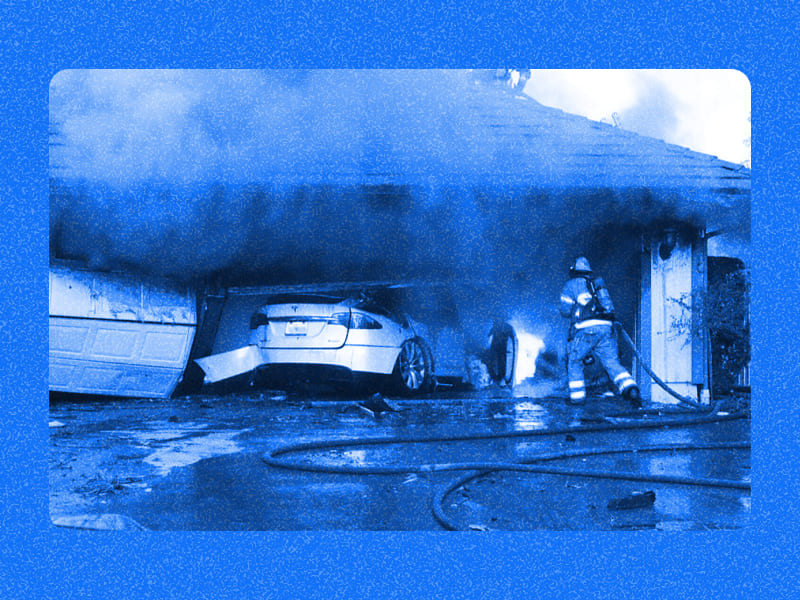
Electric vehicle battery fires present unique challenges that significantly increase insurance costs. When lithium-ion batteries overheat or sustain damage, they can ignite in thermal runaway events, often resulting in a total vehicle loss. As a result, EV insurance providers in the UAE may face higher payouts for these types of claims.
Software Malfunctions
Modern electric vehicles depend on complex software systems for their core functions. Software glitches can lead to unexpected acceleration, braking, or steering issues, increasing potential risks and insurance claim costs.
Limited Spare Part Availability
Not all electric vehicle spare parts are readily available, and sourcing them can take considerable time. Extended part wait times contribute to lengthier and more expensive claims compared to traditional vehicles.
Battery Economics: The Single Biggest Cost Driver
- Battery replacement is the dominant cost driver, with EV battery damage accounting for 40–60% of the vehicle’s value.
- EV batteries are rarely repairable; safety protocols usually require full replacement rather than refurbishment.
- Lithium-ion batteries pose fire or explosion risks, so even partially compromised packs cannot be safely reused, often leading to a total loss.
- Rapid advancements in battery technology make older battery packs expensive and difficult to source, forcing UAE insurers to build substantial reserves for EV accident repair costs. This results in higher EV insurance premiums.
Conclusion
Electric vehicles are changing UAE car insurance trends. For insurers, pricing EV policies is no longer just about vehicle value; it requires deep visibility into repair economics, battery exposure, and claim lifecycle efficiency.
This is where Mosadad becomes critical. By embedding recovery intelligence, repair validation, and settlement orchestration early in the claims process, Mosadad helps insurers contain EV claim severity, reduce leakage, and make high-cost claims predictable rather than reactive.